Breaking through the environmental bottleneck of traditional phosphorus-containing high-temperature corrosion inhibitors, it can still form a stable film under high-temperature conditions above 250°C, meeting the most stringent zero-phosphorus discharge standards for wastewater.
| Project | Technical Indicators | Testing Standards/Methods |
|---|---|---|
| Appearance | Uniform tan liquid | Visual inspection |
| Solubility | Miscible with aromatic hydrocarbons in any ratio | Visual inspection |
| Density (20℃), g/cm³ | 0.80~1.00 | GB/T 2540 |
| Freezing point, ℃ | ≤-10 | GB/T 510 |
| Closed cup flash point, ℃ | ≥61 | GB/T 261 |
| Phosphorus content, % | ≤0.01 | SH/T 0296-1992 |
| Chloride ion content, % | ≤0.01 | ASTM D7536 |
| Corrosion inhibition rate, % | ≥90 | Q/WRUN002-2019 |
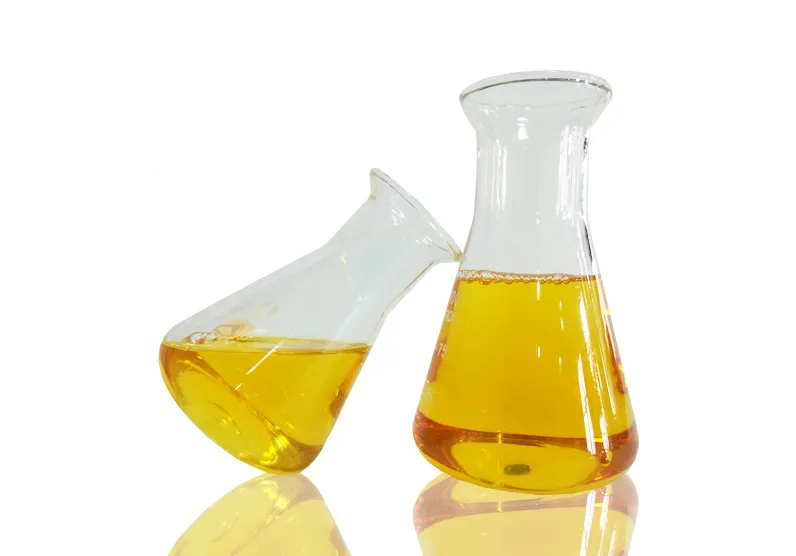
When the operating temperature exceeds 200°C, or the park where the device is located has strict phosphorus emission control requirements, it is strongly recommended to choose BXH-103/RUN-129 instead of ordinary imidazoline corrosion inhibitors, which can simultaneously solve the two pain points of high-temperature corrosion and environmental compliance.
Residue oil system at the bottom of the pressure reduction tower, 250–320°C high temperature oil and gas corrosion environment
High temperature and high pressure hydrogen environment, NH₄HS·HCl compound corrosion conditions
Delayed coking high-temperature oil and gas pipelines containing H₂S·Organic acid corrosion
Park refinery with zero phosphorus emission requirements, replacing phosphorus-containing high-temperature corrosion inhibitors
Ordinary imidazoline corrosion inhibitors lose their protective effect due to the breakage of adsorption bonds when the temperature is above 150°C. FCC In high-temperature devices such as catalytic cracking, vacuum coking, and residual oil hydrogenation, the operating temperature is generally 200–350°C. At the same time, the concentration of the corrosive medium (naphthenic acid·H₂S·HCl) is high, and the corrosion rate can be as high as 2–5 mm/a. By introducing a highly thermally stable heterocyclic structure, BXH-103 extends the effective operating temperature to 300°C, filling the product gap in the field of high-temperature corrosion inhibition.
Under high-acid crude processing conditions (TAN>1.0 mgKOH/g), BXH-103/RUN-129 is applied to vacuum residue lines and high-temperature heat exchangers with an acceptance criterion of ≥90% inhibition (finished product, Q/SHCG standards). Successfully trialed at Daxie Petrochemical No.2 CDU (signed application report, verified by CNOOC Research Institute scale-sample analysis), with an evaluation certificate issued by Wuhan Petrochemical.
| index | numerical value |
| Appearance | Dark brown homogeneous liquid |
| Phosphorus content | Not detected (<0.01%) |
| Use temperature | 80–300℃ (can withstand 350℃ in the short term) |
| Recommended dosage | 15–50 mg/L |
| Naphthenic acid corrosion inhibition | TAN≤4.0 mgKOH/g device is applicable |
| Implementation standards | Q/BXH 003—2023 |
BXH-103 is for high temperature working conditions FCC Corrosion inhibitor for equipment, suitable for naphthenic acid and sulfur corrosion protection in FCC oil slurry circulation lines, vacuum coking, residual oil hydrogenation and other high-temperature parts above 220℃.
BXH-103 / RUN-129 solve the two major problems of high temperature corrosion and environmental protection standards for you at the same time